If you hold a cannabis license with ten or more employees, odds are a cannabis labor peace agreement is sitting in your compliance binder right now. For years it was the price of admission: sign with a union, promise neutrality, or don’t get licensed. In the last six months, that deal started cracking. New York just repealed its mandate. A federal judge in New Jersey called the state’s version preempted. And on November 2, 2026, the Ninth Circuit put California’s fight back on the board.
So is your labor peace agreement still a license condition, a contract you’re stuck with, or a negotiating chip? It depends on your state, your paperwork, and how fast you move. Here’s the state of play for every cannabis labor peace agreement, without the union-hall spin or the management-side wishful thinking.
What a Cannabis Labor Peace Agreement Actually Is
A cannabis labor peace agreement (LPA) is a contract between a licensed employer and a labor organization. The union promises not to strike, picket, boycott, or otherwise disrupt operations. In exchange, the employer typically gives up rights it would otherwise have under the National Labor Relations Act (NLRA).
Those concessions usually include:
- Neutrality: management stays quiet during an organizing campaign. No anti-union meetings, no “let’s talk about what a union means for your paycheck.”
- Card check: the union gets recognized when a majority signs cards, instead of going through a secret-ballot NLRB election.
- Access: organizers get onto the premises and, in some states, get employee contact lists.
In most industries, unions have to earn those terms at the bargaining table. In cannabis, several states simply made a cannabis labor peace agreement a licensing requirement. That’s the part now under fire. If you want the broader picture of how organized labor got into this industry, our earlier piece on cannabis unions covers the backstory.
Why Cannabis Labor Peace Agreement Mandates Are Under Attack
The legal theory is simple: the NLRA already governs how private employers and unions deal with each other. When a state forces an employer to waive federal labor rights as a condition of doing business, it’s regulating territory Congress kept for itself. Lawyers call this Garmon and Machinists preemption.
For a long time, that argument barely mattered. Courts looked at cannabis plaintiffs and said, essentially, “You’re violating federal drug law every day; don’t ask us for federal help.” That shield is thinning. Courts are increasingly willing to reach the merits, and the April 2026 move of state-licensed medical marijuana to Schedule III weakens the “you’re all federal criminals” reflex even further. (More on that shift in our breakdown of what Schedule III cannabis means.)
Here’s where the scoreboard sits as of this week.
5 Critical Shifts in the Labor Peace Landscape
1. New York repealed its cannabis labor peace agreement mandate (October 28, 2026)
Gov. Kathy Hochul signed Senate Bill 10643 on October 28, 2026, as Chapter 369 of the Laws of 2026. The law removes the requirement that adult-use licensees and medical registrants enter into and maintain labor peace agreements. It also strips the provisions that let regulators revoke or refuse to renew over LPA noncompliance.
Two catches. First, existing collective bargaining agreements are not invalidated, and voluntary LPAs remain enforceable as contracts. Second, the same law includes an industry wage board and new applicant disclosure provisions scheduled for January 31, 2027. Hochul and legislative leaders agreed to strip those out in a chapter amendment, but as of today that amendment hasn’t passed. Don’t celebrate until it does.
2. New Jersey’s mandate lost in federal court, for one company
In Curaleaf Holdings, Inc. v. New Jersey Cannabis Regulatory Commission, No. 25-cv-16397 (D.N.J.), the court held that CREAMMA’s labor peace requirement is preempted by the NLRA. Final judgment came down August 10, 2026, and the CRC appealed to the Third Circuit three days later, according to Foley Hoag’s analysis.
Read the fine print: the judgment is declaratory and as applied to Curaleaf. Every other New Jersey licensee is still on the hook. That’s why the copycat suits are lining up. Verano filed its own preemption case on July 31, 2026, and also asked to void its union contracts (we covered it on Cannabis Legalization News). A Jersey City retailer, The Cannabis Place 420 Corp., followed on October 5, 2026. If you’re operating under a New Jersey cannabis license, the Third Circuit is the ballgame.
3. The Ninth Circuit revived California’s challenge (November 2, 2026)
California requires applicants and licensees with ten or more employees (supervisors excluded) to have a cannabis labor peace agreement covering every employee, per the Department of Cannabis Control. Smaller applicants must sign within 60 days of hiring their tenth worker, and renewals require an attestation of compliance.
In Ctrl Alt Destroy Inc., a retailer argued the scheme violates the First Amendment and is preempted by the NLRA. The district court tossed the case in March 2025 on “unclean hands,” reasoning that a federally illegal business can’t get equitable relief. On November 2, 2026, the Ninth Circuit vacated that dismissal. It said the lower court skipped the required balancing and should weigh the fact that California “legalized and now facilitates, regulates, and profits from” the very activity it calls unclean, as reported by The Marijuana Herald.
Translation: California’s LPA rule is still fully in force. But the “you’re a drug dealer, go away” defense just got a lot weaker across the entire Ninth Circuit, which matters for every cannabis plaintiff in the West, not just this one.
4. Oregon already lost
Oregon’s Measure 119 tied licensure to labor peace commitments. In Casala, LLC v. Kotek, a federal court struck it down on May 20, 2025, on both First Amendment and NLRA preemption grounds and issued a permanent injunction. Oregon is the proof of concept every challenger now cites.
5. Illinois never made it a mandate, but it still costs you points
Illinois took the carrot approach. The Cannabis Regulation and Tax Act builds “labor and employment practices” into application scoring, and a cannabis labor peace agreement is one way applicants have earned those points. No mandate means no preemption fight, but in a competitive round, points are points. See how that math works in our guide to cannabis license application scoring.
Minnesota and Connecticut also condition licensing on labor peace commitments for many operators. Neither has a final court ruling yet. Expect that to change.
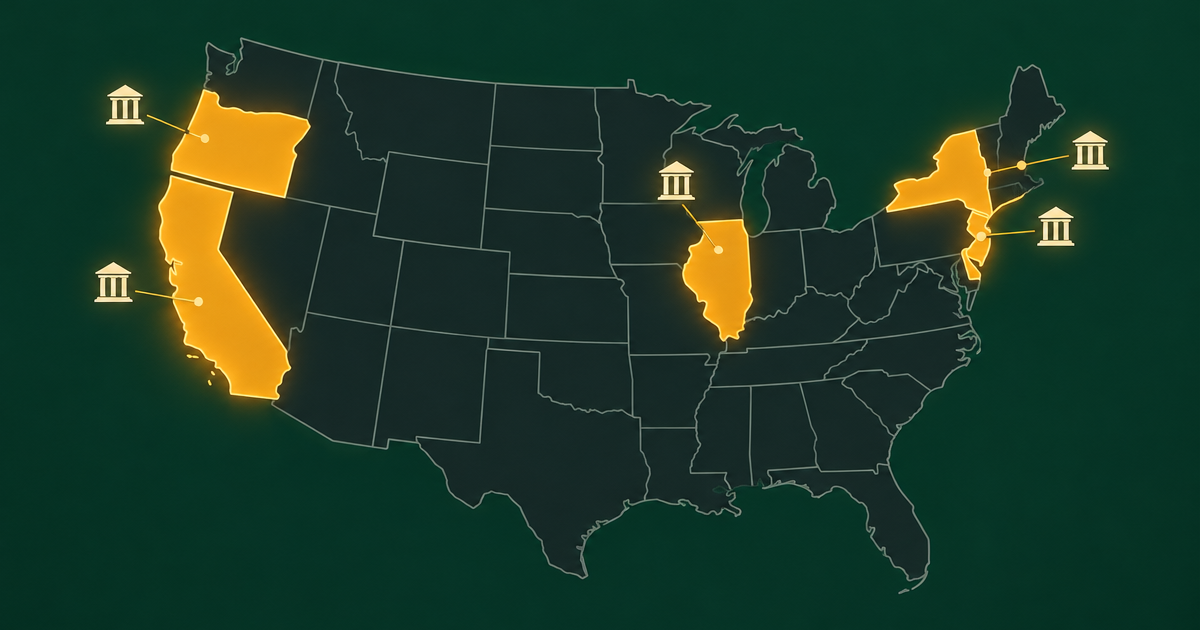
Cannabis Labor Peace Agreement Status by State
| State | Current Status (Nov. 2026) | What to Watch |
|---|---|---|
| New York | Mandate repealed by S10643 (Oct. 28, 2026) | Wage board chapter amendment before Jan. 31, 2027 |
| New Jersey | Mandate in force; preempted as applied to Curaleaf | Third Circuit appeal; Verano and Cannabis Place suits |
| California | Mandate in force (10+ employees) | Ctrl Alt Destroy on remand after Ninth Circuit ruling |
| Oregon | Measure 119 enjoined (May 2025) | Template for challenges elsewhere |
| Illinois | No mandate; scoring factor | Future licensing rounds and scoring rules |
Your Cannabis Labor Peace Agreement Action Plan
Here’s the trap: an operator reads “New Jersey LPA preempted” in a headline, stops honoring its agreement, and gets a CRC enforcement letter. The ruling didn’t free you. It freed Curaleaf.
Pull your agreement and read the exit terms
Your cannabis labor peace agreement is a contract, separate from the statute that forced you into it. Check the term, termination triggers, notice requirements, and whether the agreement references the state mandate as its reason for existing. Language like “entered into pursuant to” the licensing statute can matter a lot if the mandate disappears. Same goes for the change-of-control clause; a cannabis labor peace agreement can follow the license into an acquisition, which is why we flag it in every cannabis asset purchase diligence list.
Separate the LPA from any CBA
If your workforce already organized and you signed a collective bargaining agreement, that contract likely runs through its stated term no matter what happens to the mandate. Repealing a licensing condition doesn’t erase a union that won recognition.
Decide whether to litigate or wait
New Jersey operators have a real choice: file their own declaratory action, raise preemption in administrative proceedings, or sit tight for the Third Circuit. Each path has cost, timing, and relationship consequences with the union and the regulator. Picking one by default is still picking one.
Don’t run labor strategy off a template
Neutrality, captive-audience meetings, and card check are federal labor law questions, and the rules shift by state. If you’re in Illinois, our sister firm’s Illinois employment lawyer team handles the HR side, and our cannabis employment lawyer page covers how we integrate it with licensing. For the operational side of staffing and SOPs, Collateral Base’s guide to cannabis licensing compliance is a good checklist.
How a Cannabis Labor Peace Agreement Shows Up in Deals
Buyers keep missing this one. A cannabis labor peace agreement is a liability that rides along with the license, and it rarely shows up on a data room checklist unless someone asks for it by name.
In an equity deal, the agreement stays with the licensed entity, so the buyer inherits every neutrality promise and access right the seller signed. In an asset deal, the question becomes whether the union can argue successorship or whether the state will demand a fresh agreement before approving the transfer. Either way, the regulator’s change-of-ownership review is where it surfaces, usually at the worst possible moment. Our guide to cannabis license transfer rules walks through that approval process state by state.
Three questions belong in every letter of intent right now:
- Is there an LPA or CBA, and with which union? Get the signed copies, not a rep that “the company is in compliance.”
- What happens to it at closing? Look for assignment, successor, and change-of-control language.
- Who carries the risk if the mandate falls or survives? Price it, escrow it, or put it in the indemnity. Pretending it doesn’t exist is not a strategy.
If a management company is running the store, check that agreement too. Labor commitments buried in a management services agreement can create exactly the control questions regulators love to ask about.
Frequently Asked Questions
Is a cannabis labor peace agreement still required in New York?
No. S10643, signed October 28, 2026, removed the requirement for adult-use licensees and medical registrants. Existing agreements and collective bargaining agreements may still bind you as contracts, so review the terms before walking away.
Did the Curaleaf ruling end New Jersey’s labor peace requirement?
Not for everyone. The August 2026 judgment applies only to Curaleaf, and the CRC appealed to the Third Circuit. Other New Jersey licensees should keep complying unless and until a broader ruling or rule change arrives.
Does California still require labor peace agreements for cannabis businesses?
Yes. Applicants and licensees with ten or more employees must have an LPA covering all employees. The Ninth Circuit’s November 2, 2026 ruling only revived a lawsuit challenging the rule; it did not strike the requirement.
Can I cancel my cannabis labor peace agreement if my state repeals the mandate?
Maybe. It depends on the agreement’s term, termination provisions, and whether it ties its existence to the statute. Repudiating early can trigger breach claims or labor disputes, so get the contract reviewed first.
Does Schedule III rescheduling affect a cannabis labor peace agreement?
Indirectly. Rescheduling state-licensed medical marijuana weakens the argument that cannabis businesses can’t seek federal court relief because of federal illegality. That makes NLRA preemption challenges easier to bring.
Get Ahead of the Next Ruling
The cannabis labor peace agreement era isn’t over, but it’s no longer a permanent tax on your license either. The operators who win this cycle are the ones who read their contracts now, model the scenarios, and act when the Third and Ninth Circuits rule, not six months after.
Want a second set of eyes on your cannabis labor peace agreement, your CBA, or your exposure if the mandate falls? Book a consultation with Cannabis Industry Lawyer and we’ll map out your options state by state.
Disclaimer: This article summarizes labor peace developments in New York, New Jersey, California, Oregon, and Illinois as of November 4, 2026. Cannabis and labor laws change frequently and vary by state. This is general information, not legal advice, and reading it does not create an attorney-client relationship. Consult a qualified attorney in your jurisdiction before acting. Attorney Advertising.